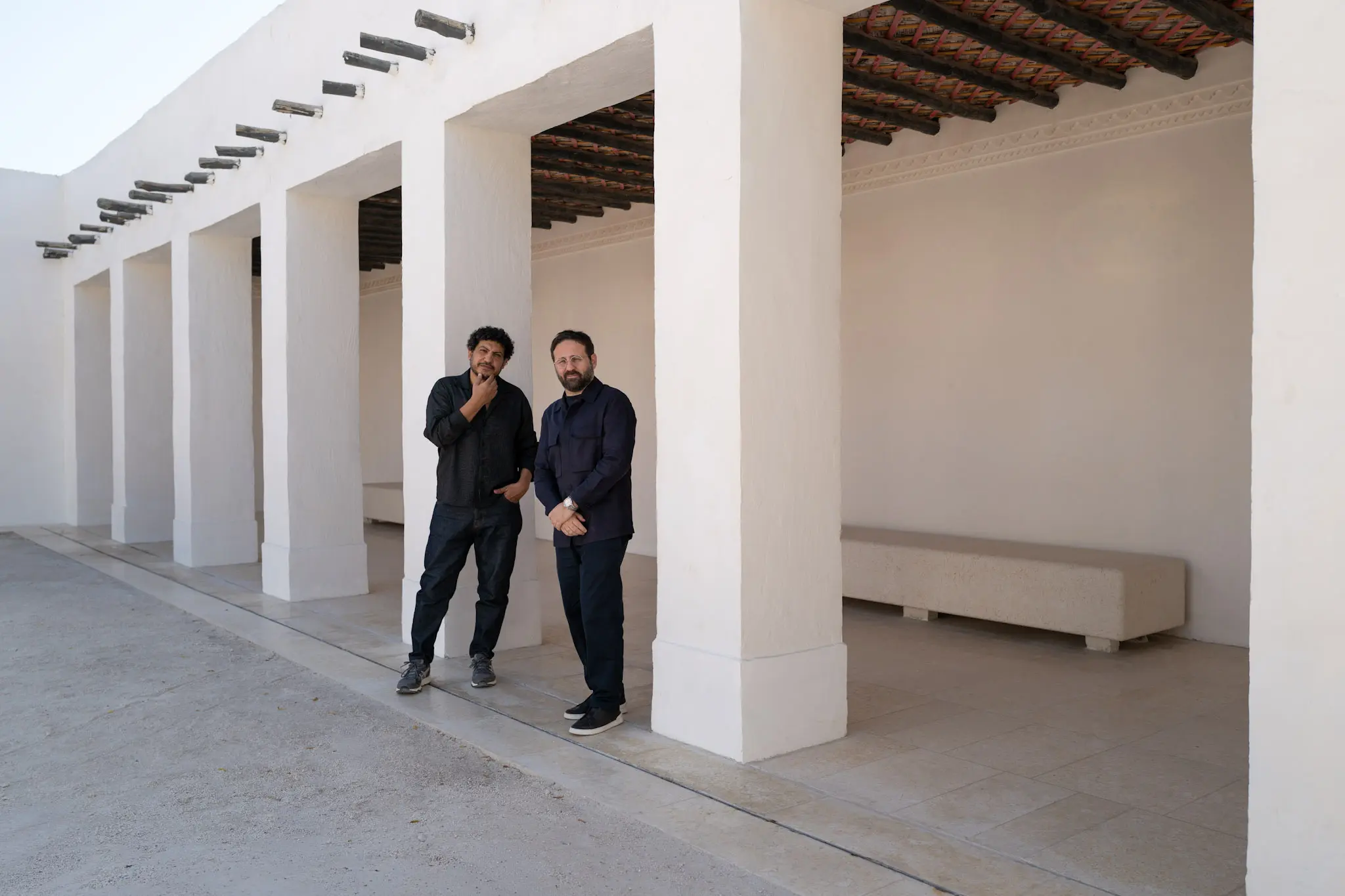
Art Basel will launch its newest international fair in Qatar in February 2026, marking the organization’s first permanent presence in the Middle East. The inaugural edition will take place across venues in Msheireb Downtown Doha, including M7 and the Doha Design District, positioning the region as an active center of contemporary artistic production rather than a peripheral market.
Art Basel Qatar will run from Feb. 5 to Feb. 7, 2026, with preview days on Feb. 3 and 4. The fair brings together 87 galleries from 31 countries, presenting 84 artist projects across a curated exhibition format. Unlike traditional booth-based fairs, the Qatar edition adopts an open layout designed to emphasize artistic dialogue, spatial interaction and long-form engagement.
The fair introduces a thematic framework titled Becoming, which focuses on transformation, cultural continuity and the evolution of artistic language. The structure reflects how artists across the Middle East, North Africa and South Asia engage history, place and contemporary conditions without reducing their work to regional classification.
Art Basel Qatar is artistically directed by Wael Shawky, with curatorial leadership from Art Basel’s chief artistic officer Vincenzo de Bellis. Their approach prioritizes exhibition logic over commercial segmentation, allowing works to coexist within a shared conceptual environment. Film, installation, sculpture, performance and architectural interventions form the backbone of the program.
Special Projects will anchor the fair’s spatial and conceptual presence. At M7, Bruce Nauman will present a newly commissioned 3D video installation designed specifically for the building’s grand theatre. The work engages perception, sound and spatial awareness through immersive form. Elsewhere, Hassan Khan will debut a live suite combining music, performance and digital systems, extending his ongoing exploration of sound, authorship and public experience.
Architect and designer Sumayya Vally will present an evolving majlis installation that draws from historic communal gathering spaces across the Muslim world. The work examines architecture as a social practice shaped by memory, ritual and collective presence. These projects are integrated into the fair rather than separated as standalone spectacles.
The gallery selection reflects a balance between established international programs and influential regional platforms. Several galleries are participating in an Art Basel fair for the first time, reinforcing the event’s role as an entry point for voices that have historically operated outside dominant Western art circuits. The geographic diversity of participants reflects sustained creative ecosystems already active across the MENASA region.
Rather than positioning Qatar as a new arrival, the fair acknowledges decades of cultural infrastructure building in Doha. Museums, public art commissions and educational institutions have laid the groundwork for sustained artistic production. Art Basel Qatar builds upon this foundation by introducing a globally recognized fair model adapted to local context.
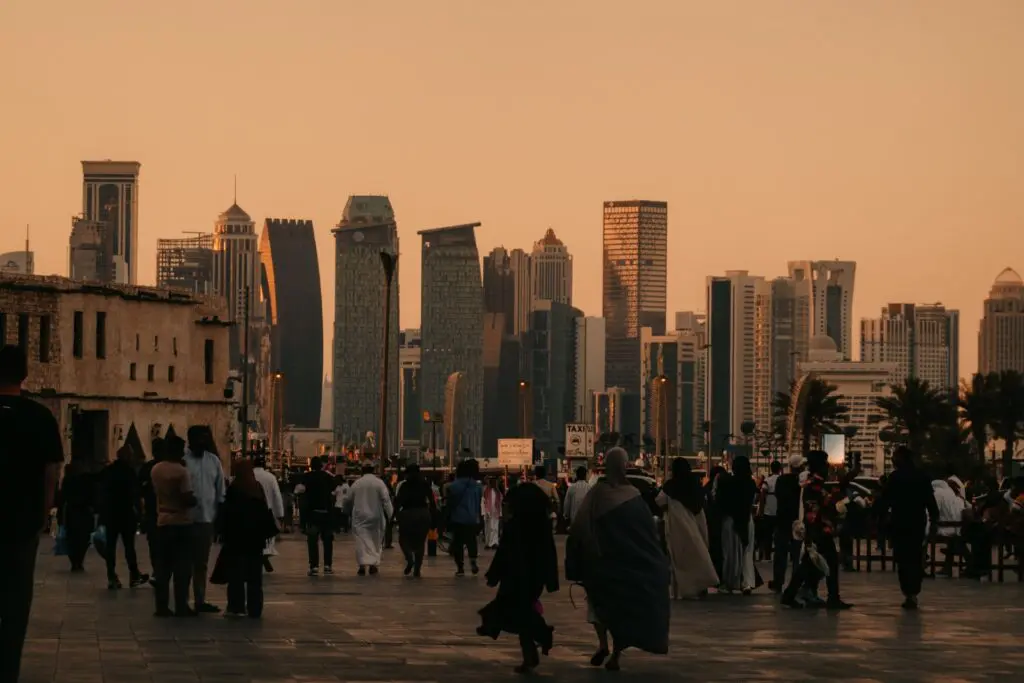
Msheireb Downtown Doha serves as a symbolic and functional anchor for the event. Designed as a pedestrian-centered district integrating heritage architecture with contemporary urban planning, the area provides a setting aligned with the fair’s emphasis on continuity and transformation. M7 functions as a hub for creative industries, fashion and design, reinforcing the interdisciplinary nature of the program.
Art Basel Qatar also reflects a broader rethinking of what an international art fair can be. By moving away from dense booth grids and emphasizing curated encounters, the fair proposes a format that allows artworks to unfold over time. This approach supports practices rooted in research, narrative and material experimentation.
The fair’s timing aligns with a period of increased cultural exchange across the Middle East. Artists from the region are engaging global audiences while maintaining distinct visual languages shaped by local histories. Art Basel Qatar offers a platform that recognizes this complexity without flattening it into trend or token.
As preparations continue toward its opening, Art Basel Qatar represents a recalibration of the global art map. It does not suggest a shift away from existing centers but adds depth to the network by foregrounding creative regions long active yet often underrepresented within major market structures.
In February 2026, Doha will host a fair that reflects where contemporary art is already taking shape. The significance lies not in arrival but in recognition, offering space for artists and galleries to define their own terms within a global framework.