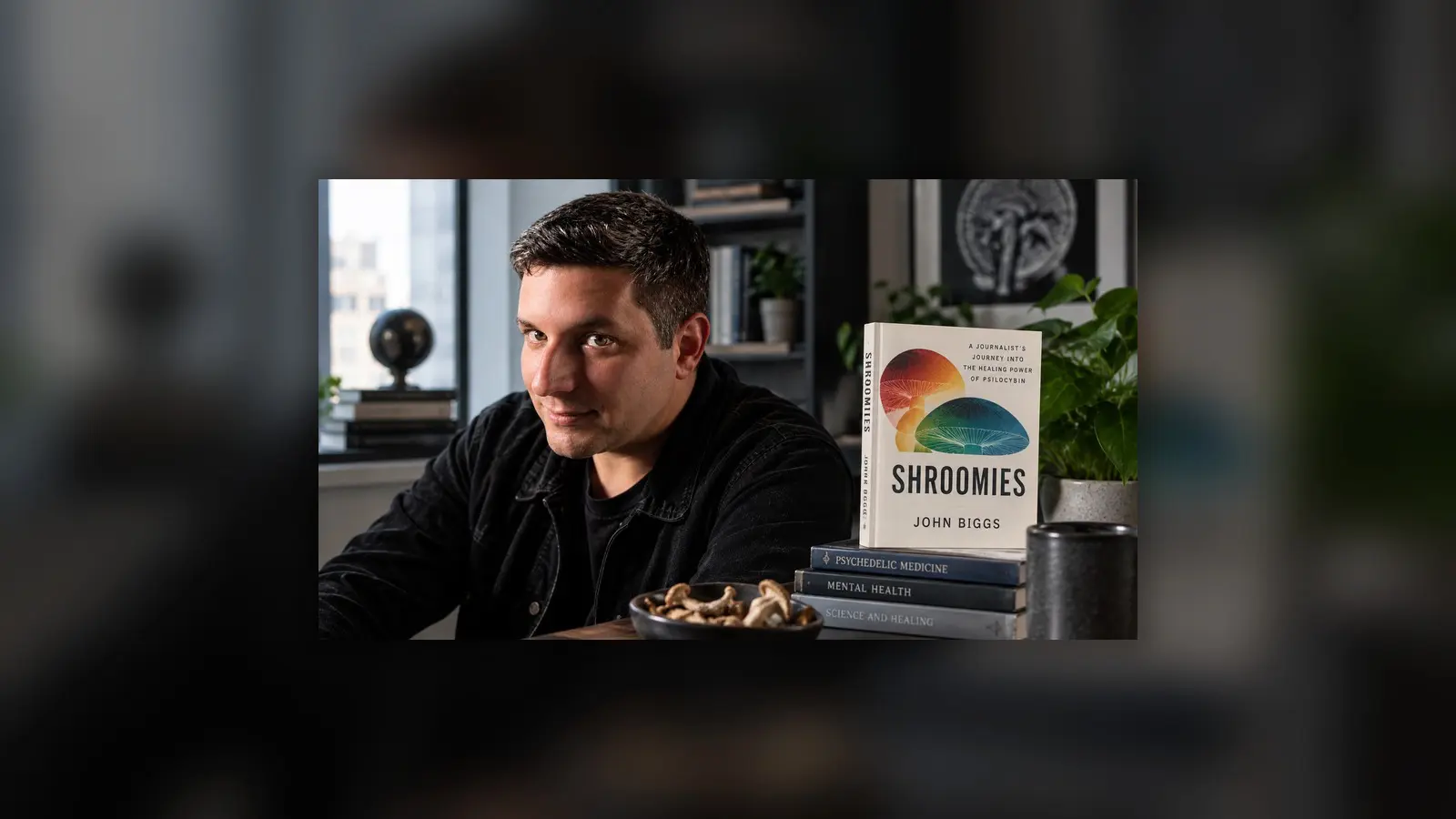
John Biggs author of Shroomies, explores psilocybin and the growing psychedelic movement.
The former TechCrunch and Gizmodo editor turns his own battle with depression into Shroomies, an investigation of psilocybin, healing and what psychedelic advocates still get wrong.
Former TechCrunch and Gizmodo editor John Biggs spent years interrogating Silicon Valley’s promises. Now he is turning that skepticism toward psychedelics in Shroomies, his new book about depression and psilocybin set to release September 8, 2026.
Biggs was grieving his father in 2018 when he fell into a deep depression. He tried SSRIs and alcohol, but said his life kept moving in the wrong direction.
“I gained 100 pounds and got sadder and sadder,” Biggs told New York Edge News. Then a friend convinced him to attend a mushroom session in New York.
“I didn’t expect anything out of the mushrooms when I started and the entire thing sounded ridiculous to me,” he said. “That’s why I started researching — to understand what happened.”
Biggs grew 10 strains of mushrooms and interviewed veterans dealing with PTSD, death doulas working with terminally ill people, sexologists and others exploring psychedelics.
“I’m a cynical journalist, so this isn’t a book about rainbows and kittens,” he said in his initial outreach .
The science around psilocybin is becoming harder to dismiss. A 2023 randomized clinical trial published in JAMA found that a single 25-milligram dose, given with psychological support, significantly reduced depressive symptoms compared with an active placebo. A 2026 JAMA Network Open trial found the antidepressant effect could come on quickly and last for months, although by one year psilocybin was no longer outperforming placebo on the study’s main depression measure.
Biggs is not selling mushrooms as magic.
“I have traditional therapy as well and I think the combination of both is vital,” he said. “You need to integrate psychedelic experiences because they can be quite intense and just doing mushrooms isn’t sufficient.”
That same push and pull sits at the center of Common Side Effects, Adult Swim’s animated series about a rare mushroom with extraordinary healing potential. In the series, powerful institutions quickly become invested in controlling who can access it. The premise taps into a larger question surrounding psychedelics today — who gets to decide what healing is legitimate and who gets access to it?
When asked why psychedelics still make institutions and the public uneasy, Biggs said the resistance is more complicated than pointing to a single villain.
“The mushroom industry is vilified and actually does itself no favors,” he said. “The industry needs to grow on its own terms but practitioners need to let it grow mindfully.”
He is equally direct about the risks.
“The risks are abuse and potential psychosis,” Biggs said. “Psychedelics should be taken in controlled environments where safety is paramount.”
For Biggs, the difference between simply having a trip and experiencing meaningful change comes down to what happens afterward.
“Follow-up and integration,” he said. “When you treat mushrooms like a party drug, you have fun. When you treat them like medicine you get lasting benefits. It’s that simple.”
Related on New York Edge News
The Relationship Recession: What Happens When Millennial’s Age Without Partners — including research on loneliness, substance use and the growing normalization of psychedelics among younger adults.
Who Killed Progress? Charles Frey on AI, Power, and the Next Collapse — another New York Edge News interview examining Silicon Valley, institutional control and what happens when emerging ideas collide with entrenched power.