From Blue Fairy to AI Friend: Can Microsoft’s Copilot Truly Deliver Human Connection and Inclusivity

In Artificial Intelligence, the fictional character David searches endlessly for his Blue Fairy, a mythical figure he believes can turn him into a real boy and reunite him with his mother. This one-dimensional figure, an all-knowing being, symbolizes an unreachable ideal, much like how generative AI today can sometimes feel—offering answers and connection but limited in depth and emotional understanding. David’s longing for something more real and complete mirrors society’s current relationship with AI technologies, where there is still a gap between artificial companionship and genuine human connection.
Microsoft AI recently unveiled new features for their AI companion, Copilot, at a demo event held at the Microsoft Experience store on 5th Avenue in New York. This signifies the next chapter in our daily interactions with technology.
Designed to spark creativity and assist with everyday tasks, Copilot uses advanced large language models (LLMs) and natural language processing (NLP) to offer a more fluid, human-like experience. Copilot wants to be more than just a static product, it strives to act as a partner in work and the process of creating. However, much like David’s pursuit of the Blue Fairy in the movie Artificial Intelligence, significant efforts are still needed to bridge the gap between current AI capabilities and the emotional intelligence developers aspire to achieve
Microsoft AI, a division of Microsoft Corporation, launched Six months ago and designed Copilot, with diversity at its core. Unlike the Bluetooth-powered gadget Friend, created by founder Avi Schiffmann, Friend acts more like an emotional support pet, while Copilot’s role is broader and more human-centered. “We want Copilot to be a part of your everyday life, not as a gadget, but as something that enhances your creativity and problem-solving skills,” says Mustafa Suleyman, co-founder of Google DeepMind and now CEO of Microsoft AI. He emphasizes that Copilot is about fostering real-world engagement.
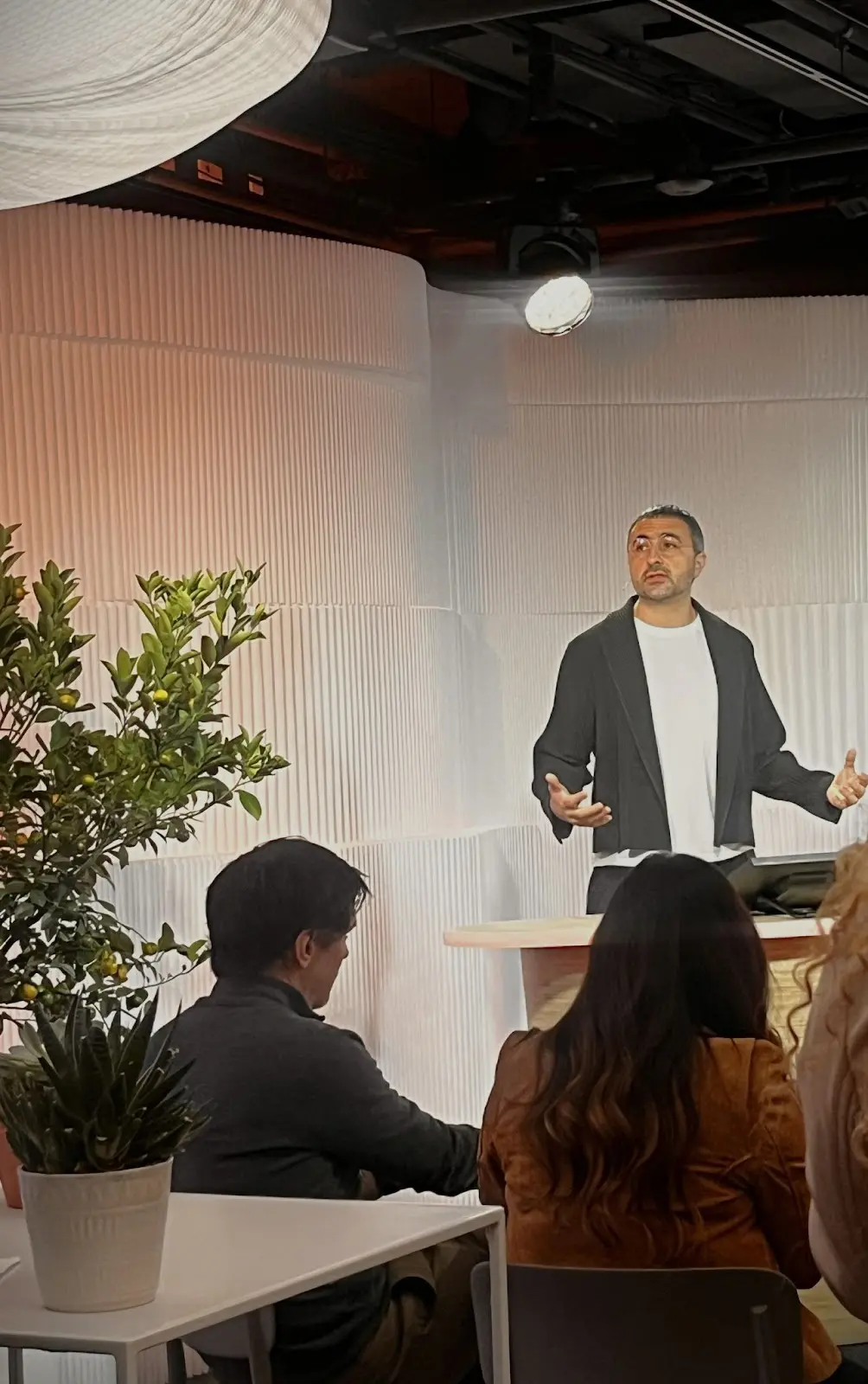
Photo Credit: Kianga J. Moore. During the October 1, 2024, Microsoft AI presentation for the Copilot reveal, CEO and EVP Mustafa Suleyman emphasized the company's vision for Copilot as a tool designed to foster creativity and human connection.
But like any technology, especially one that’s supposed to connect people, questions around the development that goes into the output of true inclusivity arise. One of the most immediate observations is the absence of a distinctly Black female and Latin voice within Copilot’s options. As I interacted with Copilot, I realized that while you could select voices like ‘Meadow’ or ‘Canyon,’ there wasn’t an option that reflected the tonality of a Black woman. This is one of those subtle omissions that remind us how much further we need to go when building socially inclusive technology.
Research has shown that AI systems overall, while making strides in simulating human interaction, often fall short when it comes to addressing the nuanced needs of diverse communities. In a study published in PNAS it was highlighted that large language models tend to amplify existing social biases, particularly in how they replicate language and cultural norms, which can inadvertently marginalize underrepresented voices.
Copilot’s boundaries are evident when I tried to explore racial issues. The AI companion avoided or sidestepped the topic, offering politically correct responses. While this may reflect an effort to avoid inflammatory topics, it also raises concerns about how these AI systems handle sensitive but essential conversations around race and identity without feeling like assimilation.
Still, Copilot has its strengths. In its conversations, it’s responsive and adaptive, evolving in real-time to match the user’s emotional tone. Mustafa notes, “It’s designed to pick up on your energy. If you approach with high energy, it mirrors that. If you’re tired or frustrated, it mirrors that too.”
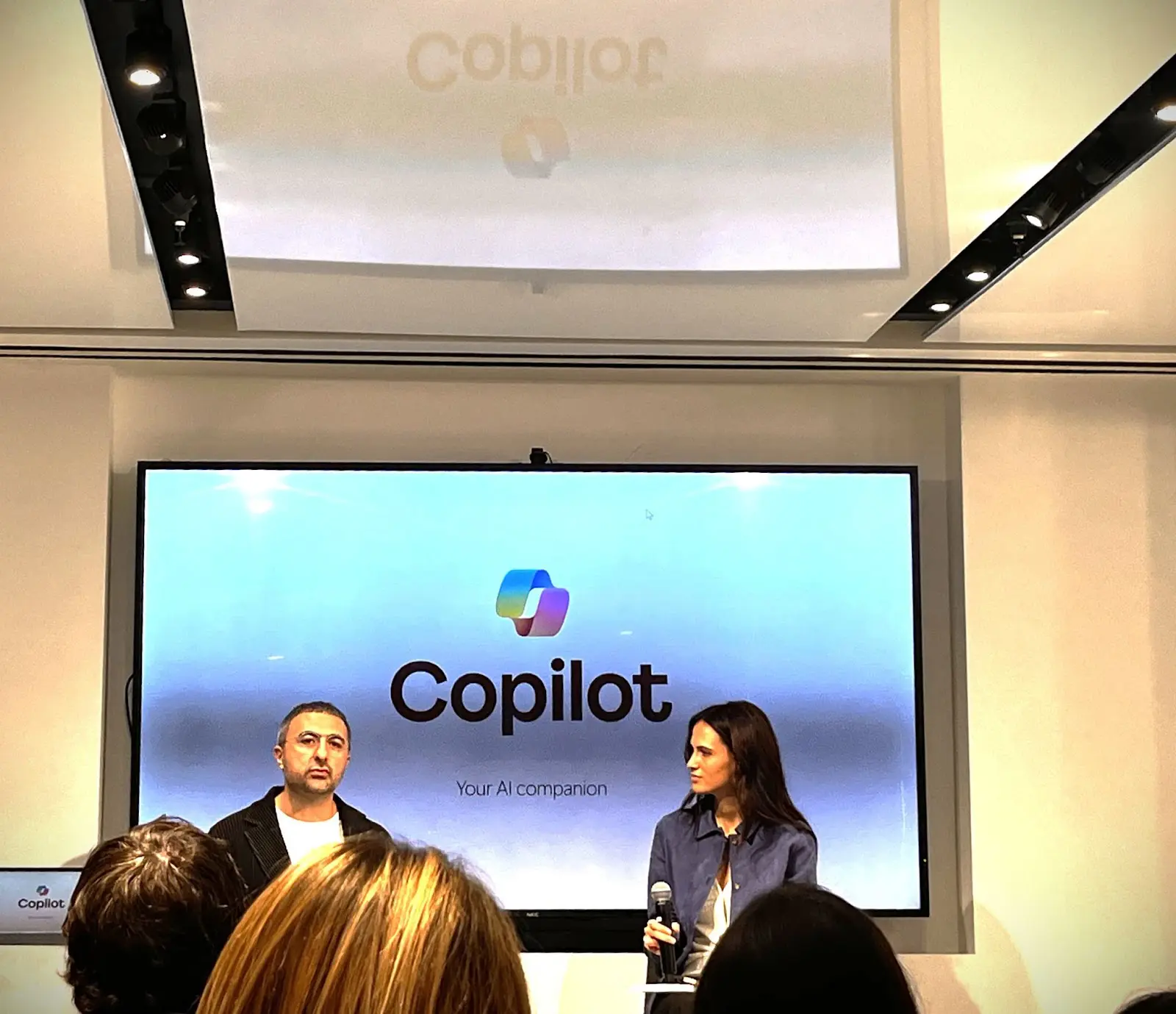
Photo Credit: Kianga J. Moore. Microsoft AI Copilot presentation Q&A with CEO and EVP Mustafa Suleyman.
This adaptive interaction isn’t just for personal conversations. Copilot’s ability to process real-time data, such as flight patterns or news content, enhances its ease of use. This version of AI is deeply integrated into Microsoft’s ecosystem, pulling news from trusted sources like Reuters and USA Today. However, the reliance on paid content can be problematic for independent publishers and creators.
During the Copilot Demo in New York, in early October, Mustafa was asked, “How does Copilot interact with independent publishers, bloggers, and smaller news outlets?.” Mustafa responded candidly, noting that while today’s Copilot Daily only includes paid news sources, future iterations will expand to include third-party content. “We want to drive traffic to independent publishers, bloggers, and creators. That’s a big part of what we’re building,” he explained.
This is a critical point, especially for smaller publishers who rely on visibility and traffic to sustain their platforms. Microsoft’s business model, which includes paying for content through Bing and MSN, raises the question of how independent media can survive in an ecosystem where larger entities dominate the information landscape. As Mustafa puts it, “It’s about balancing utility with inclusivity. We want people to have access to a wide range of voices, but we also need to ensure that those voices are compensated fairly.”
In terms of functionality, Copilot continues to evolve. Mustafa discussed its future, noting features like “Think Deeper,” which processes information more thoroughly, delivering more nuanced and well-reasoned responses. “We’re pushing the boundaries of what AI can do,” he says. And while it’s still in the early days, the goal is clear- Copilot is not just here to assist; it’s here to create a more integrated, responsive, and emotionally intelligent digital experience.
Yet, the question remains—how will this technology impact independent publishers and creators who often depend on search engines for traffic and visibility? While currently, Microsoft’s business model supports larger content providers, the implications for smaller publishers are uncertain. For companies like UIN + Affiliates, there needs to be a way to ensure the content is visible and not overshadowed by paid or sponsored material.”
The “Blue Fairy” of AI has arrived, but whether it will truly fulfill the diverse needs of its users—especially those from marginalized communities—remains to be discovered. As Copilot continues to evolve, so too must the conversations around how AI interacts with the full spectrum of the human experience.
Author
In this landmark work, Oxford economist Carl Benedikt Frey traces how progress unravels when power consolidates faster than ideas can

Randolph and Brooklyn Circus launch a unique fashion collection celebrating the Golden 13, transforming history into wearable art. By Kianga

LOS ANGELES (AP) — The Hollywood Bowl has staged its share of unforgettable performances, yet this Friday’s “The Lion

RIYADH, Saudi Arabia — Riyadh Season has unveiled three captivating new zones — Boulevard Runway, Souq Al-Awaleen, and Dunes of

Eastern Congo, home to one of the world’s richest deposits of coltan, enduring conflict in the name of consumer profits

“Citizenship must mean something. If my own government won’t act, who will?” — Sara Saleem The narrative matters Thousands of

Nearly forty years after he first painted a polka-dotted house on Heidelberg Street, Tyree Guyton’s Heidelberg Project remains one of

by: Alesha Lawrence Dandyism remains a dynamic form of self-expression and cultural pride for people of African descent, evolving from

photo credit Evan Zimmerman for MurphyMade Justice Ketanji Brown Jackson will break new ground this Saturday, December 14, at 8

Sanaz Toossi’s “English” Delivers an Intimate Exploration of Language and Identity Revati Iyengar for New York Edge News Photo Credit:
Share
CATEGORIES
Need More Help