“Detroit Public Theatre’s Here There Are Blueberries Turns History Into a Haunting Must-See for Traveling Theatre Lovers”
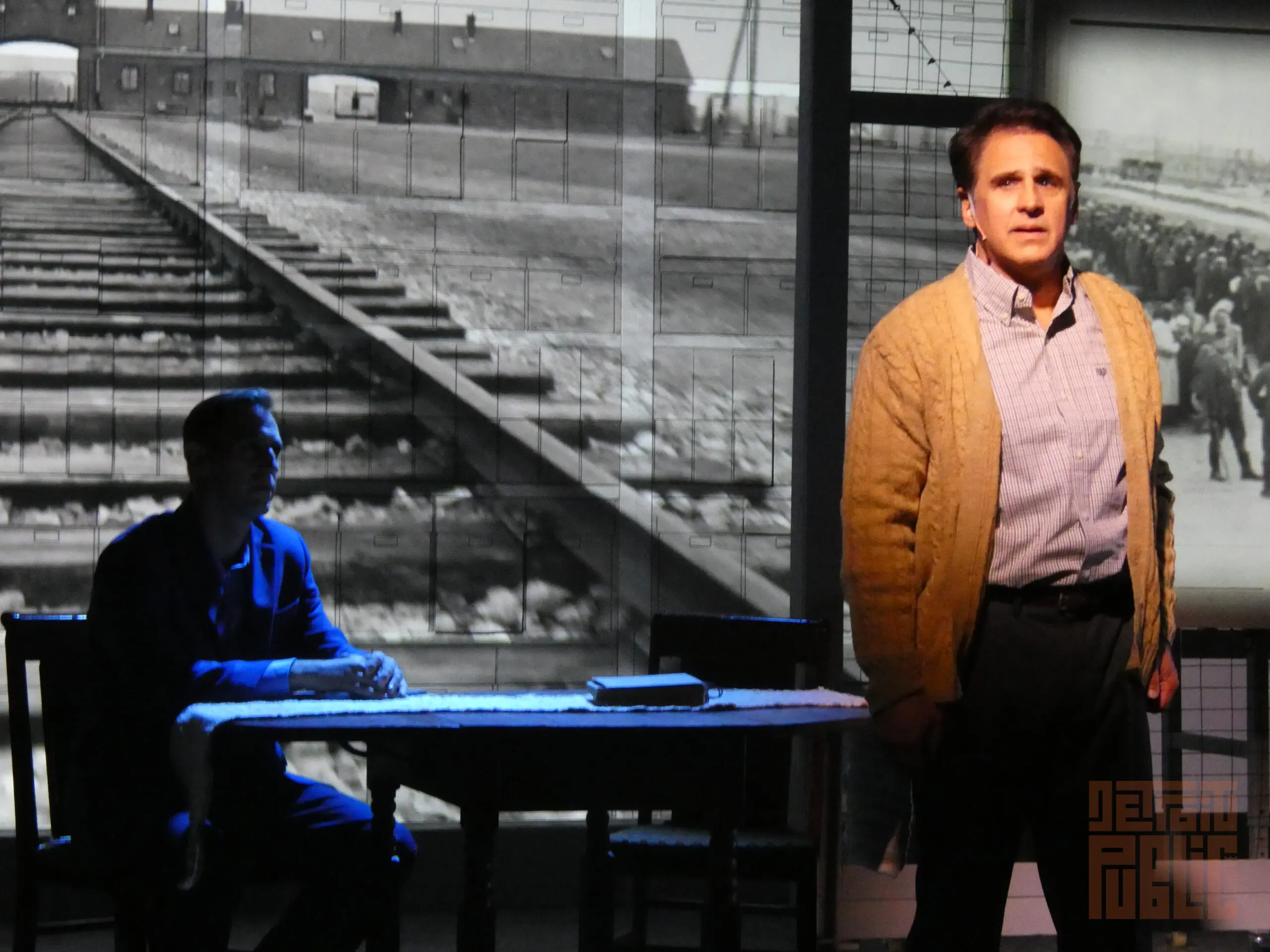
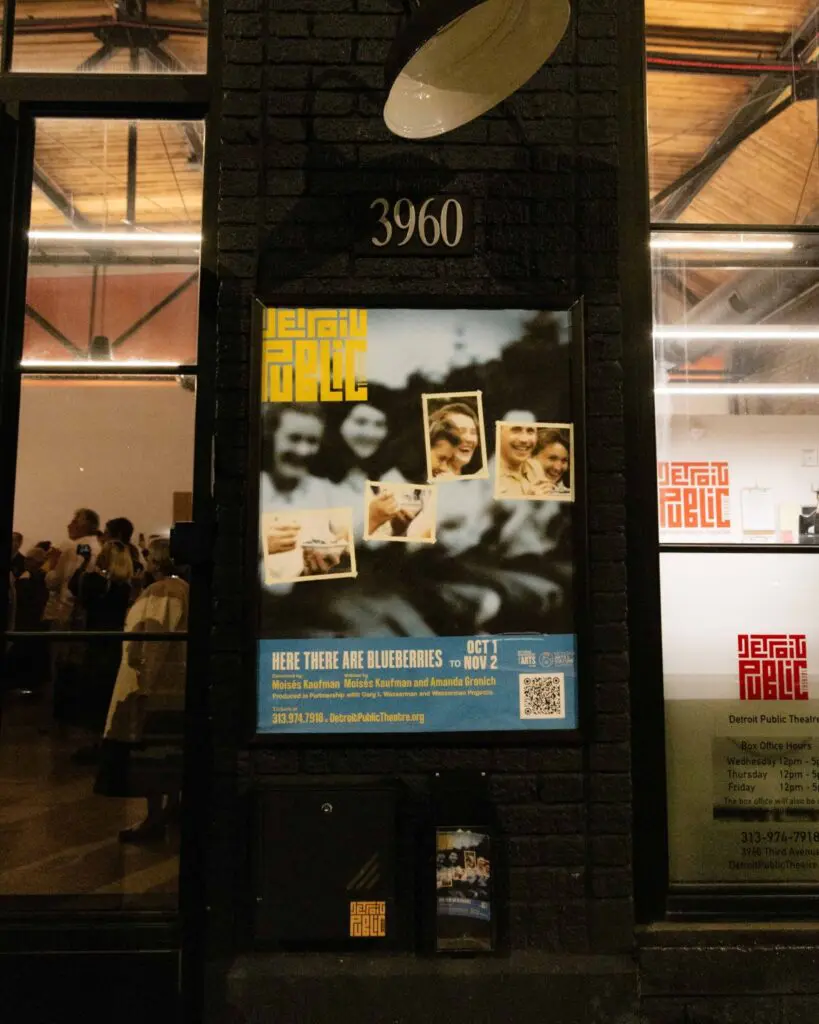
For theater lovers who like to travel, Detroit Public Theatre has launched its eleventh season with the American premiere of a work that has been quietly gathering power for a decade. Conceived by Moisés Kaufman and written with Amanda Gronich, Here There Are Blueberries opened on October 1 and plays through November 2. It is the first time a company outside Tectonic Theater Project’s own tour has been entrusted with the piece. Here There Are Blueberries reputation precedes it: a finalist for the Pulitzer Prize and a Lortel Award winner, it comes to Detroit as both history lesson and moral inquiry.
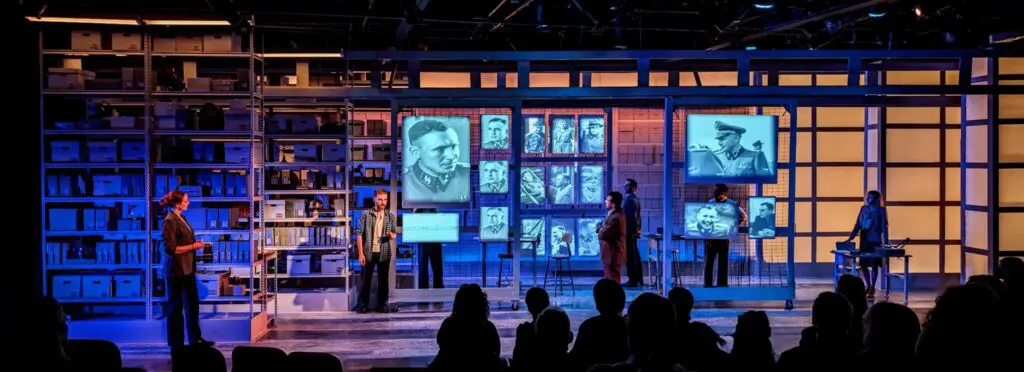
The story begins in 2007, when an anonymous donor sends a photo album to the U.S. Holocaust Memorial Museum. The album, later traced to SS officer Karl‑Friedrich Höcker, contains snapshots of life at Solahütte, a retreat near Auschwitz. These images, which look like something from a family vacation, are terrifying precisely because of what they exclude: the genocide unfolding just miles away. As the museum’s head archivist and her team—portrayed with quiet intensity by an ensemble of eight—begin to identify the faces, they also unearth the roles these seemingly ordinary people played in an extraordinary evil. The detective work has an almost CSI‑like rhythm, though the evidence here is hauntingly real.
From the first scene, the play insists that the album is part of our shared history. One character asks, almost in a whisper, “Why was my grandfather there?” Another confesses a desire to immerse herself in the river of research—“I longed to be part of this current,” she says—only to realize that participation carries moral weight. The photographs of SS women enjoying berries lead to a charged debate over innocence and accountability.
Kaufman and Gronich spent years developing Here There Are Blueberries, and the craftsmanship shows. The enmesheses archival material, interviews, and personal reflections without sensationalism. Under Amy Marie Seidel’s direction, the actors—Eric Gutman, Diane Hill, Artun Kircali, Kate McClaine, Rebecca Rose Mims, Sam Reeder, Cheryl Turski, and Ron Williams—move fluidly between roles: archivists, historians, descendants, perpetrators.
The tone, appropriately, is restrained. Seidel resists the urge to moralize, letting the material speak for itself. A scene in which curators debate whether the women in the album knew about the gas chambers is staged with the quiet intensity of a courtroom. At another moment, a descendant of an SS officer attempts to excuse his grandfather’s actions by citing orders from above, only to realize that obedience offers no absolution. Those moments echo contemporary debates about complicity, whether in the context of war, institutional racism, or, as one character notes, the “insane inflation” of modern political rhetoric. Comparisons to Jonathan Glazer’s film The Zone of Interest, which also explores the banality of evil near Auschwitz, are inevitable; yet whereas the film gazes outward at a family oblivious to their proximity to horror, Kaufman’s play turns inward, asking the audience to examine their own capacity for denial.
When one character observes, “Time passes on and we all live in the world,” it’s a reminder that we are connected to history whether we acknowledge it or not. The line is uttered after the audience has spent ninety minutes confronting smiling faces frozen in amber and the unseen violence behind them.In a time marked by social and political upheaval, the story’s resonance is undeniable. By the end, the audience is invited not only to reflect on the moral choices of individuals long gone but also to scrutinize their own roles in the world today.
Here There Are Blueberries is not an easy watch. It demands that viewers sit with uncomfortable truths and unresolved questions. Yet it is precisely this discomfort that makes the play so vital. Detroit Public Theatre’s choice to feature this production demonstrates a willingness to confront difficult topics and spark necessary conversations. For those interested in theatre that goes beyond entertainment to provoke thought and self-examination, this is a show not to be missed.
Authors
Infineo Global calls itself a FinTech. The scale of what it is attempting places the company inside a larger conversation
Loneliness is emerging as one of the most significant yet overlooked drivers of substance misuse, and the data shows a

In July 2025, the White House released a digital‑assets roadmap promising to usher in a “Golden Age of Crypto.” On

Winter skin damage doesn’t happen by accident. It’s the collision of seasonal biology and outdated product decisions. The drop in

Tickets go on sale today for Broadway’s revival of Proof, starring Ayo Edebiri and Don Cheadle, directed by Hamilton’s Thomas

New York Edge News | Curators of News and Information Zohran Kwame Mamdani, born in Kampala and raised in Queens,

At this year’s Pepcom-hosted Holiday Spectacular in New York, technology brands shifted the narrative beyond specs and gaming into the

Water is life, but around the world it’s running out. More than 2.2 billion people live without safe drinking water,
For theater lovers who like to travel, Detroit Public Theatre has launched its eleventh season with the American premiere of

The morning of, October 14, 2025, Michael Eugene “D’Angelo” Archer transitioned from this world. The Neo-soul dynasty lost another iconic
Share
CATEGORIES
Need More Help